

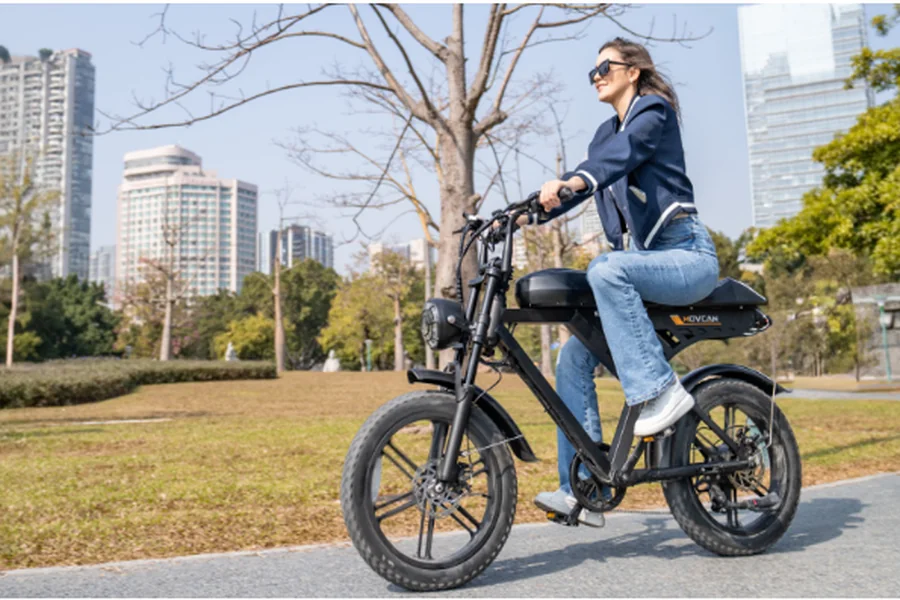
The modern urban landscape is undergoing a quiet transportation revolution, with electric bicycles emerging as the definitive solution to increasingly congested city centers. Unlike their conventional counterparts, today’s commuter bike with electric assistance offers a compelling alternative that eliminates many traditional barriers to cycle commuting—perspiration, exhaustion, intimidating topography, and impractical commuting distances. This transformation is reshaping not only personal transportation habits but the very infrastructure of forward-thinking cities.
The Economics of E-Bike Commuting: Beyond the Purchase Price
The financial calculus of electric commuting extends far beyond the initial acquisition cost, revealing compelling economic advantages when analyzed comprehensively:
Direct Cost Comparison: When evaluating transportation expenses over a standard five-year period, the numbers tell a revealing story:
| Expense Category | Car Commuting (5 years) | Public Transit (5 years) | E-Bike Commuting (5 years) |
| Initial Purchase | $23,000 (mid-range sedan) | $0 | $1,800 (quality mid-range) |
| Fuel/Electricity | $7,500 ($1,500/year) | $0 | $36 ($7.20/year) |
| Insurance | $6,000 ($1,200/year) | $0 | $150 ($30/year) |
| Maintenance | $3,000 ($600/year) | $0 | $750 ($150/year) |
| Parking | $9,000 ($1,800/year) | $0 | $0 |
| Transit Passes | $0 | $4,800 ($960/year) | $0 |
| TOTAL COST | $48,500 | $4,800 | $2,736 |
This analysis reveals that e-bike commuting saves approximately $45,764 compared to car ownership and $2,064 compared to public transportation over a five-year period—while providing on-demand mobility without timetable constraints.
Time Efficiency: The Hidden Advantage
While speed comparisons might suggest automobiles maintain advantages over e-bikes, real-world urban analysis reveals surprising results:
Morning Rush Hour (5-mile urban commute):
- Car: 27 minutes (including parking search and walking to office)
- Public Transit: 32 minutes (including waiting time and transfers)
- E-Bike: 19 minutes (direct door-to-door travel)
Reliability Metrics (percentage of commutes with ±5 minutes of expected arrival):
- Car: 68% (high variability due to unpredictable congestion)
- Public Transit: 74% (subject to service disruptions)
- E-Bike: 91% (consistent travel times regardless of traffic conditions)
This reliability advantage represents a significant quality-of-life improvement for consistent scheduling of morning meetings and family obligations.
The Health Paradox: Electric Assistance and Physical Benefits
Contrary to intuitive assumptions, research demonstrates that e-bike commuters actually receive substantial health benefits despite the electric assistance:
Average Heart Rate During Commute:
- Conventional Bicycle: 72-85% of maximum heart rate (often excessive for untrained individuals)
- E-Bike: 65-72% of maximum heart rate (ideal moderate-intensity exercise zone)
Annual Commuting Distance:
- Conventional Bicycle Commuters: 1,500 miles average
- E-Bike Commuters: 2,700 miles average
This increased utilization results from greater willingness to use e-bikes for longer trips and in challenging conditions (hills, headwinds, hot weather) that might otherwise prompt alternative transportation choices.
A longitudinal study tracking 10,000 commuters across European cities found that e-bike commuters averaged 76 more active commuting days annually than conventional cyclists—a 35% increase in physical activity frequency.
Practical Considerations for the Prospective E-Commuter
For those considering transitioning to e-bike commuting, several practical considerations ensure optimal experiences:
Security Infrastructure Requirements:
- Primary lock: Minimum 14mm hardened steel U-lock ($80-120 investment)
- Secondary lock: 10mm chain or folding lock with different locking mechanism
- Secure parking location: Covered, monitored, or within employer facilities whenever possible
- Component security: Quick-release seat posts and wheels should be secured or replaced with locking alternatives
Weather Adaptation Strategy:
- Implement layering systems using technical fabrics rather than heavyweight options
- Utilize fenders with extended coverage (minimum 120° wrap around tire circumference)
- Maintain dedicated footwear at workplace rather than commuting in work shoes
- Consider pneumatic systems with self-sealing capabilities for puncture prevention in wet conditions
Route Selection Principles:
- Prioritize segregated infrastructure where available
- Select routes with lower speed differentials between traffic and e-bike capabilities
- Utilize satellite mapping to identify gradient-optimized alternatives to primary vehicle routes
- Consider air quality monitoring data when selecting between parallel route options
Component Priorities for Commuter-Specific Applications
Commuter bike recommendations should prioritize specific features creating meaningful improvements for daily users:
Essential Commuter-Specific Components:
- Integrated lighting systems connected to main battery (minimum 600 lumens front, 80 lumens rear)
- Full-coverage fenders with mud flaps extending 4″ below axle height
- Internally geared hubs or belt-drive systems minimizing maintenance requirements
- Purpose-built commuter-specific tires balancing puncture protection with reasonable rolling resistance
- Frame-integrated locking systems providing secondary security without additional carrying requirements
Conclusion: The Logical Evolution of Urban Mobility
The electric commuter bicycle represents not merely an incremental improvement to conventional cycling but rather a fundamental reimagining of urban transportation dynamics. By eliminating the primary barriers to widespread adoption—physical exertion, impractical range, challenging topography, and arrival condition—e-bikes create a compelling alternative that combines the autonomy of private transportation with the cost structure and environmental benefits of sustainable mobility.
For urban dwellers facing increasingly congested streets, rising parking costs, and climate concerns, the electric commuter bicycle offers a rational solution addressing economic, practical, and environmental priorities simultaneously—explaining their remarkable adoption rate across diverse demographic segments and geographic regions, as highlighted by eeetimes.
