

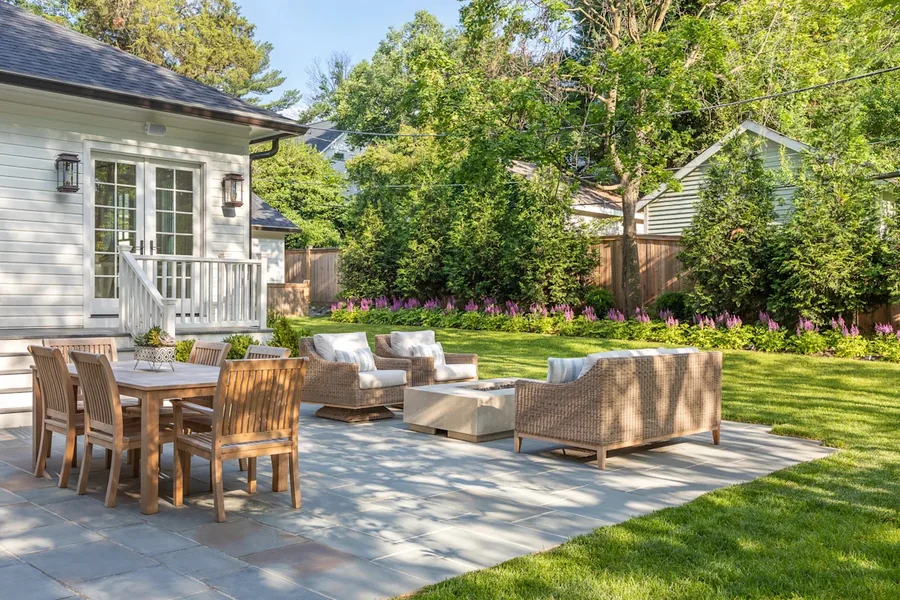
Designing your own garden is an exciting prospect for many. However, it’s easy to get swept up by the aesthetic choices found on Instagram or Pinterest and end up with something that would take considerable time to maintain.
In fact, many striking layout choices come with their own hidden, intensive maintenance requirements that can drain your energy on weekends when you should be resting and recharging instead.
Here’s how to identify 6 of these high-effort design elements beforehand, so you can make smarter adjustments to your plan that will preserve both the visual appeal of your home’s exterior and your free time.
1. Lawns With Odd Curves And Sharp Corners
A large, sweeping expanse of green grass is a great sight to behold in British gardens. However, the terrain shape heavily dictates your weekly workload.
Complex garden layouts featuring tight curves, narrow grass paths, or sharp, angular corners create immense frustration during the mowing season.
Standard lawn mowers cannot easily navigate these tight spots. This forces you to constantly stop, change direction, or finish the job by hand, which is not only more labour-intensive but also annoying.
Beyond the actual mowing, complicated shapes leave behind vast areas of uneven turf.
If your design features grass directly abutting a loose gravel path or a crumbling brick wall without an adequate divider, you will spend hours with an edger trying to stop the lawn from migrating. Simplifying these lines makes the chore much more manageable.
2. Small Paving Stones With Too Many Gaps
A beautifully laid stone terrace provides an excellent area for outdoor dining, but the way it is installed determines how often you will need to pull weeds.
Patios constructed with hundreds of small, irregular paving slabs mean a massive network of joints. If these gaps are filled with traditional sand or weak mortar mixes, they become prime real estate for airborne weed seeds and windblown soil.
Within a single season, moss and weeds can take hold in the cracks, turning a sleek patio into a patchy mess. Once roots establish themselves beneath the stones, removing them without dislodging the mortar becomes incredibly difficult.
Choosing larger slabs or using modern, resin-based jointing compounds can significantly reduce the time you spend on your knees weeding the terrace.
3. Delicate Plants That Can Not Handle British Weather
While it may be incredibly tempting to fill your borders with exotic plants, introducing specimens unsuited to the erratic British climate imposes a heavy burden of continuous care.
Many of these varieties demand specific soil chemistry and precise hydration levels, to say nothing about the intensive shielding from local pests that’s also required.
When winter arrives, these tender choices often require lifting, wrapping in fleece, or moving into a heated greenhouse to survive the frost.
If your garden design relies heavily on flora that fights against the local microclimate rather than working with it, you will find yourself locked in a constant, frustrating battle to keep them alive and presentable.
4. Flower Beds Without A Proper Border Wall
Deep flower beds filled with structural shrubs and perennials add wonderful depth to a property, but they require a definitive boundary line to stay organised.
Designing beds with loose, natural soil edges looks charming at first, but it leaves the soil completely free to spill onto pathways and lawns whenever it rains heavily or the birds forage.
Without a solid, physical barrier—such as a deeply set timber rail, metal strip, or stone border—the distinction between your lawn and your flower beds will vanish within months.
Grass roots will aggressively invade the nutrient-rich soil of the borders, and stray mulch will continuously wash away, turning a simple garden tidy into a frustrating exercise in reconstruction.
5. Large Wooden Decks That Rot In The Damp
Wooden decking has long been a popular choice for creating elevated seating areas, but it is one of the most demanding materials you can introduce to an outdoor space.
Traditional softwoods are highly susceptible to the damp British climate. Without intensive annual cleaning, sanding, and sealing, the wood will absorb moisture, warp, split, and succumb to rot.
Furthermore, in shaded or north-facing positions, timber decking quickly accumulates a layer of microscopic algae and moss.
When wet, this surface turns into a treacherous hazard. The ongoing commitment needed to keep timber looking fresh and structurally sound makes it a challenging choice for anyone seeking a relaxed garden layout.
6. Fast-Growing Hedges That Shoot Up Too Quickly
Using greenery as a natural privacy screen or boundary marker is an excellent design choice, but choosing the wrong species can create an endless cycle of heavy pruning.
Fast-growing evergreens, such as Leyland cypress or certain privet varieties, can shoot up by several feet every year. If planted directly along a property line, they quickly grow out of reach.
And, as you might have guessed, managing a massive, overgrown boundary hedge requires serious physical labour, specialised tall ladders, and the logistical headache of disposing of bags of dense green clippings multiple times a year.
If the hedge is neglected for even a single season, it can block out natural light, encroach on neighbouring properties, and become a source of local friction. So, you should really choose carefully here to avoid all kinds of headaches.
Why Keeping Your Garden Layout Simple Matters
A successful garden layout should strike a healthy balance between visual interest and practical management.
When an outdoor space is designed purely for immediate impact, it often results in a chaotic landscape that deteriorates rapidly without constant intervention. Thinking about long-term maintenance from the very beginning prevents your property from becoming overwhelming.
Focusing on clean lines, resilient local planting choices, and durable hardscaping materials creates an outdoor environment that matures gracefully over time.
This approach ensures you spend less time fixing structural issues or fighting invasive weeds, and more time actually relaxing and enjoying the natural environment you have created around your home.
When To Call In The Gardening Experts
While many homeowners enjoy taking care of basic weeding and seasonal planting themselves, a poorly planned landscape can eventually outstrip the capabilities of standard domestic tools.
It’s sensible to consider expert care when large hardscaping features, such as ageing timber decks or crumbling stone patios, require intensive restoration, power washing, and structural sealing.
You should also consider calling trusted garden upkeep experts from Bristol if you inherit a layout packed with delicate, overgrown species that need specialist pruning, or if you need to reshape massive boundary hedges that require commercial-grade equipment to manage safely.
Experienced specialists can help streamline a demanding garden, replacing problematic elements with low-maintenance alternatives that keep your outdoor space looking pristine with far less effort.
Conclusion
You’ve probably arrived at the conclusion by now that creating a beautiful garden does not mean you have to sign up for an exhausting weekend of labour.
Knowing the design pitfalls and prioritising structural simplicity instead can help you build a stunning interior space that works with you rather than against you.
That way, your garden will remain not only easy to maintain but also a source of genuine relaxation and pride for many years to come.
Good luck and happy gardening!
