

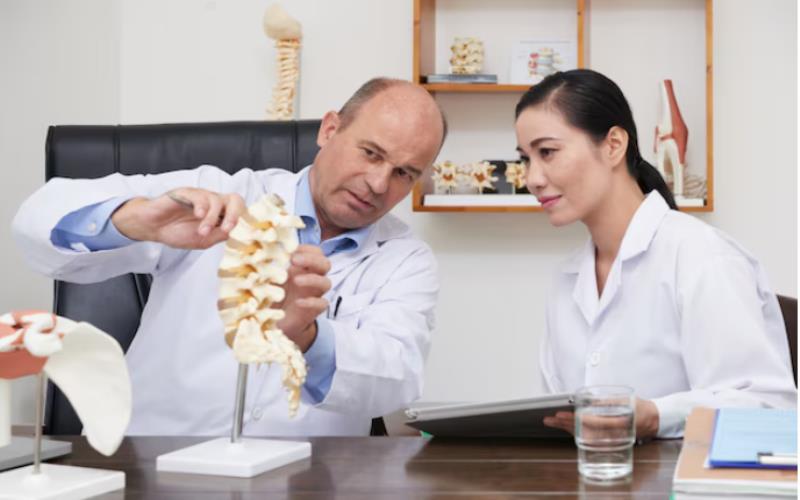
Discover key signs & effective remedies for herniated disc symptoms. Gain understanding & tackle the pain.
A herniated disc refers to a condition where the soft centre of a spinal disc pushes through a crack in the tougher exterior casing. It can irritate nearby nerves and result in pain, numbness, or discomfort in any affected area.
Causes of a herniated disc
A herniated disc typically results from age-related wear and tear called disc degeneration. Additionally, lifting heavy objects the wrong way, trauma, obesity, genetics, or physically demanding jobs with repetitive strain can contribute to a herniated disc. It’s important to recognize herniated disc symptoms early on to prevent further complications.
Basic anatomy involved in a herniated disc
A herniated disc involves the intervertebral discs which act as shock absorbers in the spine. This medical condition occurs when the disc’s soft, jelly-like centre (nucleus pulposus) pushes against its tough exterior (annulus fibrosus), causing pain and discomfort.
Understanding How Herniated Discs Occur
Role of the spine and its discs
The spine and its discs play a crucial role in supporting the body, facilitating movement, and protecting the spinal cord. Discs act as shock absorbers, preventing adjacent vertebrae from colliding during physical activities.
The process of disc herniation
Disc herniation occurs when the softer jelly-like interior of a spinal disc pushes out through a tear in the tougher exterior. This irritates nearby nerves, causing pain and numbness often felt in the arms and legs.
Risk factors for developing herniated discs
Herniated disc risk factors include age, as discs naturally degenerate over time, heavy physical activities, particularly those involving repetitive lifting, bending or twisting, and obesity, which stresses the lower back. Genetics also remain a significant risk factor.
Identifying Symptoms of Herniated Discs
Pain and discomfort in various body parts
Experiencing pain and discomfort in various body parts can be distressing. This discomfort can stem from several causes like chronic illnesses, physical injuries or overuse, significantly impacting one’s quality of life and everyday activities.

Numbness or tingling
Numbness or tingling sensations often occur when pressure is placed on nerves or blood vessels, restricting their normal function. These sensations could indicate underlying health issues, such as diabetes or neurological conditions, requiring medical attention.
Muscle weakness
Muscle weakness, also known as myasthenia, refers to the reduced strength in one or more muscles. It could result from a sedentary lifestyle, muscular diseases, nerve damage, aging, or malnutrition. The condition affects mobility and balance, reducing overall functionality.
How Herniated Disc Symptoms Vary Based on the Location
Cervical herniated disc symptoms
Cervical herniated disc symptoms include neck pain, numbness, tingling, and possibly weakness. These symptoms often extend into the shoulders, arms, and hands, potentially causing motor weakness. In severe cases, it can lead to loss of bladder or bowel control.
Lumbar herniated disc symptoms
Symptoms of a lumary herniated disc include lower back pain, numbness, weakness, and tingling in one or both legs. Pain typically intensifies during physical activities and may eventually cause difficulty in walking.
Diagnosis of Herniated Discs
Physical examination
A physical examination is a routine check-up wherein a healthcare professional assesses a patient’s overall health. It includes a variety of tests, an evaluation of medical history, and a complete body examination to prevent or detect diseases early.
Imaging tests
Imaging tests are diagnostic procedures that allow medical professionals to see inside the body. They play an essential role in diagnosis and treatment, using technologies like X-ray, CT scan, ultrasound, and MRI for detailed visualization of internal structures.
Nerve tests
Nerve tests are essential diagnostic tools for identifying abnormalities in the nervous system. They help detect nerve damage, gauge nerve responses, and evaluate muscle function, aiding in the diagnosis and treatment of neurological disorders.
Effective Treatments for Herniated Discs
Non-surgical treatment options
Non-surgical treatment options often include physical therapy, medications, injections, acupuncture, and lifestyle changes like diet and exercise. They’re typically pursued before resorting to invasive surgical procedures, to manage pain and improve function.
Physical therapy
Physical therapy is a healthcare profession aimed at improving mobility and alleviating pain through targeted exercises, manual therapy, and patient education. It plays a key role in recovery from injuries and chronic illnesses.
Medication
Medication is a critical tool in treating and preventing various diseases. The right medication, prescribed by a healthcare professional, can manage symptoms, cure illness, or improve the quality of a patient’s life. Safe use is essential for effectiveness.
Lifestyle changes
Lifestyle changes involve alterations in daily habits to improve personal health. This often includes embracing healthier eating habits, regular exercise, increased sleep, decreased stress, and abstaining from harmful substances.
Surgical treatment options
Surgical treatment options vary greatly depending on the individual’s condition. They range from non-invasive laparoscopic surgery to highly invasive operations like organ transplants or tumour removal. Decisions favour minimal harm and maximum effectiveness.
Discectomy
A discectomy is a surgical procedure performed to remove a herniated disc that’s pressing on a nerve root or the spinal cord. This spinal surgery aims at relieving pain, weakness, and numbness, and correcting neurological deficits like foot drop or bowel or bladder incontinence.
Laminectomy
Laminectomy is a surgical procedure often used to alleviate back pain caused by spinal stenosis. In this operation, the surgeon removes the back part of the vertebra, called the lamina, to create extra space and ease pressure on the spinal cord.
Artificial disc surgery
Artificial disc surgery is a modern medical procedure that replaces damaged spinal discs, providing relief from chronic back pain. The surgery involves the implantation of a device to mimic a natural disc’s shape and movement, significantly improving mobility and comfort.
